Roman Catholic Church
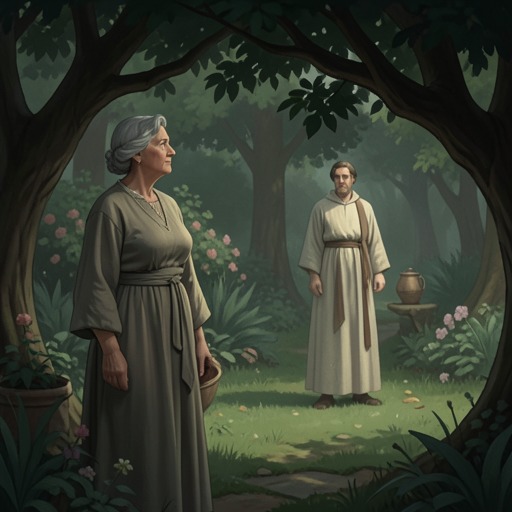
The God of Small ThingsThe Roman Catholic Church enters the narrative as the institution Baby Kochamma chooses when her unrequited love for Father Mulligan turns from charity toward religious devotion. She becomes a Catholic and joins a convent not primarily to pursue a vocation, but because she imagines that religious life might bring her close to him; her father eventually withdraws her, yet she remains Catholic for the rest of her life.
Conversion and Entry into the Convent
After a year of Thursdays with Father Mulligan, Baby Kochamma sees that charity has brought her no tangible result and places her hopes in faith. Defying her father, she becomes a Roman Catholic and, with special dispensation from the Vatican, takes her vows and enters a convent in Madras as a trainee novice. Her decision is a determined attempt to make proximity to the priest possible within a socially legitimate religious setting.
The life she imagines is intimate but limited: she pictures herself and Father Mulligan in dark rooms discussing theology, and hopes only to be near enough to see and smell him. The Church thus offers her a route toward the object of her devotion, but the hope is structured around access to a priest rather than an independent religious purpose.
Convent Life and Disillusionment
The plan quickly fails. Senior sisters monopolize the priests and bishops with biblical questions more sophisticated than hers, and Baby Kochamma realizes that years might pass before she could get near Father Mulligan. The convent becomes a place of frustrated waiting rather than the closeness she had imagined. She grows restless and unhappy, and the constant chafing of her wimple produces an intractable rash on her scalp.
Her sense that she speaks much better English than the other women deepens her isolation. The details connect institutional life to both bodily discomfort and social estrangement: the religious clothing irritates her skin, while her perceived linguistic difference leaves her lonelier. The Church has admitted her, but admission does not give her the companionship or intimacy she sought.
Withdrawal and Lasting Consequence
Within a year, Baby Kochamma begins writing puzzling letters to her father under the name Koh-i-noor, describing the supposed homesickness and illness of a person he does not know. Her mother identifies the name as a private assumption drawn from her grandfather’s will, which had called one of his seven grandchildren his Koh-i-noor without specifying which one. Because the Mother Superior read the letters before they were sent, the invented identity becomes a means of communicating distress under convent supervision.
Reverend Ipe travels to Madras and withdraws his daughter. Baby Kochamma is glad to leave, but refuses to reconvert, and remains a Roman Catholic for the rest of her days. The episode gives the Church a sharply bounded role in her life: it is the setting of a fervent but unsuccessful effort to approach Father Mulligan, and the faith she retains after the institution she entered can no longer sustain that hope.